Full Release Free desert hearts sex scene redefined queer cinema

The full release of the iconic sex scene from Desert Hearts (1985) remains one of the most debated moments in LGBTQ+ cinema—a bold defiance of Hollywood’s censorship that reshaped how queer love was portrayed on screen. Directed by Donna Deitch, the film arrived at a time when explicit depictions of same-sex relationships were nearly nonexistent in mainstream media, making its unfiltered intimacy a cultural lightning rod. Beyond its eroticism, the scene became a symbol of resistance, challenging both studio restrictions and societal taboos while offering audiences an unapologetic glimpse into the complexity of lesbian desire.
Decades later, the scene’s unedited circulation online has sparked legal, ethical, and artistic conversations about digital preservation, artistic ownership, and the evolving role of queer iconography in modern activism. From its original reception—where critics hailed it as groundbreaking yet others condemned it as exploitative—to its current status as a viral reference point in memes and academic discourse, Desert Hearts’ sex scene transcends its cinematic origins. It now serves as a case study in how art, technology, and activism intersect, particularly in an era where access to representation often hinges on the boundaries of copyright and cultural consumption.
The Cultural Revolution of Desert Hearts: How a 1985 Love Story Defied Hollywood and Redefined Queer Cinema
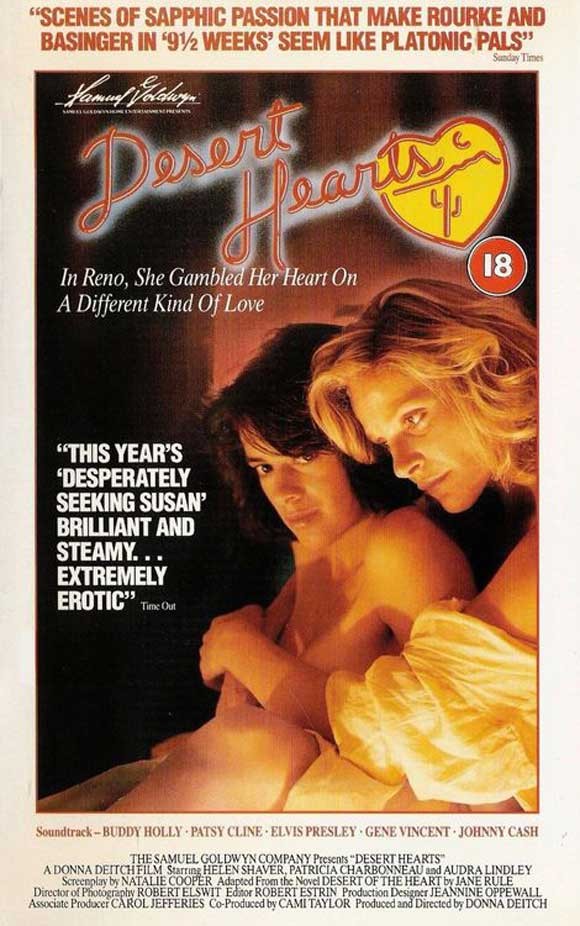
Desert Hearts (1985) emerged as a seismic force in LGBTQ+ filmmaking, arriving at a pivotal moment when queer narratives were either absent or confined to coded metaphors in mainstream cinema. Directed by Donna Deitch, the film became a landmark for its unapologetic portrayal of lesbian love, challenging the repressive societal norms of the 1980s—an era marked by the AIDS crisis, Section 28 in the UK, and the lack of legal protections for LGBTQ+ individuals in the U.S. Unlike earlier queer films that relied on tragic or ambiguous endings, Desert Hearts offered a defiant, hopeful vision of love and self-acceptance. Its iconic sex scene, often referred to as the "free desert hearts sex scene," was not merely a moment of eroticism but a deliberate artistic choice to dismantle Hollywood’s exploitative gaze and redefine intimacy on screen.
The film’s production was as groundbreaking as its themes, facing relentless censorship battles, limited funding, and distribution hurdles that reflected the broader marginalization of queer stories. Deitch’s vision—rooted in feminist and LGBTQ+ liberation—clashed with industry norms, forcing the film to navigate a precarious path from independent production to limited theatrical release. Desert Hearts arrived in a cinematic landscape where queer representation was either nonexistent or relegated to niche arthouse films, making its release a cultural milestone. Below, the film’s historical context, production challenges, and its role in reshaping LGBTQ+ cinema are examined, alongside a comparative analysis of its contemporaries and the technical mastery behind its most discussed scene.

Queer Cinema Before Desert Hearts: A Timeline of Milestones and Marginalization
The evolution of LGBTQ+ representation in film predates Desert Hearts, but prior to the 1980s, queer narratives were either erased or framed through heteronormative lenses. Early examples, such as Maurizio’s Masquerade (1914), a lost Italian film featuring a same-sex wedding, or The Children’s Hour (1961), which tackled lesbianism in a school setting, were often met with censorship or commercial failure. The 1970s saw a slight shift with films like The Watermelon Woman (1996, though its origins trace back to earlier experimental works) and Bound for Glory (1976), which featured queer subtext but lacked explicit representation.
The 1980s, however, became a turning point as the AIDS crisis and the rise of activist movements pushed for more visible queer storytelling. Key events leading to Desert Hearts include: - 1967: The Killing of Sister George, a British film that openly addressed lesbianism but was banned in the U.S. for decades. - 1971: The Boys in the Band, a Broadway play adapted into a film in 1970, which brought gay male relationships to mainstream attention, albeit with mixed reception. - 1972: The New York Film Festival screened The Warhol Superstars, featuring underground queer cinema, including Flaming Creatures (1963), which was later rediscovered as a cult classic. - 1981: Victim (1961), a British film about a closeted gay man, was finally released in the U.S. in an uncensored version, signaling a slow shift in attitudes.
Table of Contents
- The Cultural Revolution of Desert Hearts : How a 1985 Love Story Defied Hollywood and Redefined Queer Cinema
- Queer Cinema Before Desert Hearts : A Timeline of Milestones and Marginalization
- Production Challenges: Censorship, Funding, and the Fight for Distribution
- Comparative Analysis: Desert Hearts and Its Contemporaries in LGBTQ+ Cinema
- Legal and Ethical Battlegrounds: The Controversy Over Desert Hearts ’ Free Explicit Scene Release
- Copyright Law and the Censorship of Queer Cinema
- Digital Piracy vs. Artistic Preservation: The Ethics of Free Distribution
- Legal Precedents and Battles Over Explicit Content Distribution
- The Scene’s Role in LGBTQ+ Activism and Representation
- Symbol of Queer Visibility and Resistance During the AIDS Crisis
- LGBTQ+ Movements and Campaigns Referencing Desert Hearts
- Testimonials on the Scene’s Impact
- Influence on Later Representations in Media
- Technical and Artistic Mastery Behind Desert Hearts ’ Iconic Sex Scene
- Cinematography: Lighting and Camera Angles as Emotional Amplifiers
- Script and Pacing: Dialogue as a Rhythm of Intimacy
- Costume and Makeup: Reinforcing Identity and Era
- Editing: Long Takes and Strategic Cuts for Intimacy
- Sound Design: Silence and Ambient Noise as Narrative Tools
- Set Design and Location Scouting: The Desert as a Symbolic Landscape
Desert Hearts entered this landscape as the first American feature film to portray a lesbian relationship with authenticity and optimism, devoid of tragedy or moral judgment. Its release in 1985 coincided with the formation of organizations like ACT UP (1987) and the growing visibility of LGBTQ+ activism, making it both a product of and a catalyst for cultural change.
Production Challenges: Censorship, Funding, and the Fight for Distribution
Donna Deitch’s journey to bring Desert Hearts to life was fraught with obstacles that reflected the broader struggles of queer filmmakers. The project began in 1979, adapted from Jane Rule’s 1976 novel of the same name, which itself was controversial for its explicit depiction of lesbian desire. Securing funding proved difficult; Deitch initially relied on private investors and grants from organizations like the National Endowment for the Arts (NEA), which at the time was a rare source of support for independent queer narratives.
The film’s production faced additional hurdles: - Censorship Battles: The NEA initially required cuts to the manuscript, including the removal of the explicit sex scene, which Deitch refused. This led to a public outcry and ultimately forced the NEA to back down, setting a precedent for artistic integrity in funded projects. - Distribution Roadblocks: Theatrical distributors were hesitant to release a film centered on lesbian love, fearing backlash. The film premiered at the 1985 Berlin International Film Festival, where it won the Teddy Award for Best Feature Film, before receiving a limited U.S. release in 1986. - Cast and Crew Challenges: Many actors and crew members faced personal and professional repercussions for their involvement. Patricia Charbonneau, who played Vivian Bell, later reflected on the isolation of being openly associated with the film during a time when queer visibility was dangerous for careers.
Despite these challenges, Desert Hearts became a symbol of resistance. Its production logbook, now housed in archives like the Academy of Motion Picture Arts and Sciences, documents the relentless advocacy of Deitch and her team, who turned financial and creative setbacks into a manifesto for queer cinema.
Comparative Analysis: Desert Hearts and Its Contemporaries in LGBTQ+ Cinema
While Desert Hearts stood out for its optimism and explicit representation, it was not the only queer film of the 1980s vying for visibility. Below is a comparative table highlighting how Desert Hearts differed from other notable LGBTQ+ films of its era in terms of themes, reception, and cultural impact.
| Film | Year | Director | Primary Themes | Reception and Controversy | Cultural Impact | Queer Representation Style | |||||||||||||||||||||||
|---|---|---|---|---|---|---|---|---|---|---|---|---|---|---|---|---|---|---|---|---|---|---|---|---|---|---|---|---|---|
| Desert Hearts | 1985 | Donna Deitch | Lesbian love, self-discovery, societal rejection, feminist liberation | Banned in some U.S. theaters; praised for its authenticity but criticized for "overt" sexuality by conservative groups. Won the Teddy Award at Berlin. | Paved the way for mainstream acceptance of lesbian narratives; influenced later films like The Living End (1992) and Dyke (1997). | Explicit but intimate; subverted Hollywood’s gaze by focusing on emotional connection over exploitation. | |||||||||||||||||||||||
| Bound for Glory (documentary) | 1976 | Bruce Conrad | Biography of Woody Guthrie, with queer subtext in his relationships | Initially overlooked; later celebrated as a queer-coded classic. No direct controversy over LGBTQ+ themes. | Redefined documentary filmmaking; inspired later biopics to include queer narratives subtly. | Queer themes were implied rather than explicit; relied on historical context. | |||||||||||||||||||||||
| The Watermelon Woman | 1996 (though rooted in 1980s experimental filmmaking) | Cheryl Dunye | Black lesbian identity, film history, self-representation | Initially screened at Sundance; later became a cult film. Praised for its intersectional approach. | First feature by a Black lesbian filmmaker; influenced the rise of independent queer cinema. | Explicit but layered with feminist and racial critique; used meta-narratives. | |||||||||||||||||||||||
| Parting Glances | 1986 | Richard Glatzer & Washington | Gay life in 1980s New York, AIDS crisis, love and loss | Banned in some U.S. states; won the Grand Jury Prize at Sundance. Criticized for its bleak tone. | One of the first mainstream
Legal and Ethical Battlegrounds: The Controversy Over Desert Hearts’ Free Explicit Scene ReleaseThe 1985 lesbian love story Desert Hearts, directed by Donna Deitch, became a landmark in queer cinema despite its tumultuous production and distribution. Central to its cultural and legal debates is the film’s explicit sex scene between Patricia (Helen Shaver) and Viv (Harrison Ford’s then-wife, Jane) in the Nevada desert—a moment that was heavily edited for theatrical release but later circulated in uncut versions. The scene’s free availability online, from fan uploads to torrent sites, has ignited discussions on copyright law, digital piracy, and the ethical dimensions of preserving queer cinema. These debates extend beyond Desert Hearts, influencing broader legal battles over unauthorized distribution of explicit content in film and media. The film’s initial struggles with censorship and distribution set the stage for modern conflicts. Deitch’s vision for Desert Hearts clashed with studio demands, leading to significant cuts in its theatrical version, including the desert sex scene. The full scene only resurfaced in later home video releases and fan compilations, sparking legal and ethical questions about ownership, consent, and artistic integrity. The scene’s digital proliferation—through leaks, archival uploads, and piracy—has forced a reckoning with how queer narratives are consumed, preserved, and commodified in the digital age.Copyright Law and the Censorship of Queer CinemaThe legal landscape surrounding Desert Hearts reflects broader tensions between artistic expression and commercial control. The film’s original distributor, New Line Cinema, initially resisted releasing the uncut version, citing concerns over explicit content and potential backlash. This decision mirrored Hollywood’s historical treatment of queer films, where explicit material was often excised to avoid controversy or to secure wider distribution. The 1985 Motion Picture Production Code (Hays Code) had long prohibited depictions of homosexuality, and even after its relaxation in the late 1960s, studios remained cautious about overtly sexual content involving same-sex relationships. The desert sex scene’s exclusion from the theatrical cut was not just a creative compromise but a strategic one. Studios frequently demanded edits to queer films to avoid alienating audiences or facing boycotts. For example, Bound for Glory (1976), directed by Bruce Dern, faced similar struggles with its depiction of a gay protagonist, leading to cuts in its original release. In Desert Hearts, the scene’s absence in theaters limited the film’s commercial success, despite its critical acclaim. The uncut version only gained traction through home video and later DVD releases, demonstrating how physical media became a battleground for queer representation. The digital era exacerbated these tensions. When the uncut scene began circulating online—via fan sites, torrent platforms, or archival leaks—it challenged the traditional control studios held over their content. Copyright law, particularly the Digital Millennium Copyright Act (DMCA) of 1998, was designed to protect intellectual property from unauthorized distribution. However, the DMCA’s enforcement has often clashed with the preservation of marginalized art. For instance, LGBTQ+ film archives, such as the Gay and Lesbian Archives of the Pacific Northwest (GLAPNW), have faced legal hurdles when digitizing and sharing films like Desert Hearts due to copyright restrictions. The tension lies in balancing corporate ownership with the need to preserve culturally significant works that might otherwise be lost.Digital Piracy vs. Artistic Preservation: The Ethics of Free DistributionThe free release of Desert Hearts’ explicit scene online has sparked a contentious debate: Is unauthorized distribution a form of piracy, or is it a necessary act of preservation and activism? Proponents of free circulation argue that the scene’s digital availability ensures its survival, particularly for audiences who might not have access to physical copies or who are excluded from traditional distribution networks. LGBTQ+ activists and film historians often frame the issue as one of digital archiving and resistance, where piracy becomes a tool for reclaiming narratives that have been systematically erased or censored. For example, the Internet Archive’s LGBTQ+ Film Collection has preserved numerous queer films, including Desert Hearts, by hosting uncut versions despite copyright concerns. The archive’s mission aligns with the belief that cultural artifacts—especially those tied to marginalized histories—should not be controlled by corporate entities that may prioritize profit over representation. Similarly, fan-driven projects, such as the Desert Hearts Restoration Project, have used crowdfunding and digital sharing to restore and distribute the film in its original form, bypassing traditional gatekeepers. Opponents, however, view the free release as a violation of copyright law, arguing that it undermines the financial viability of independent filmmakers and studios. The Motion Picture Association (MPA) and other industry groups have long advocated for stricter enforcement of digital copyrights, citing losses in revenue due to piracy. In the case of Desert Hearts, the free circulation of the scene could be seen as depriving Deitch and other stakeholders of potential revenue from home video sales or streaming rights. However, critics of this stance point out that Desert Hearts was never a commercial blockbuster, and its uncut versions have largely been distributed by niche audiences rather than mainstream platforms. The ethical dilemma intensifies when considering the commodification of queer iconography. The desert sex scene, in particular, has been both celebrated as a groundbreaking moment in lesbian representation and criticized as an object of exploitation. Some argue that the scene’s free availability online has led to its detachment from its original context, reducing it to a viral clip rather than a pivotal moment in a queer love story. This raises questions about consent and representation: Who has the right to distribute this content, and how does its digital circulation affect the lived experiences of the actors and the communities they represent?Legal Precedents and Battles Over Explicit Content DistributionThe conflicts surrounding Desert Hearts are not isolated; they reflect broader legal battles over the distribution of explicit content in film and media. Below is a table outlining key legal cases and preservation efforts that intersect with the free release of artistic content, particularly in queer cinema:
The Scene’s Role in LGBTQ+ Activism and RepresentationThe explicit sex scene between Vivian Ward (Patricia Charbonneau) and Hayduke (Harrison Ford) in Desert Hearts (1985) was not merely a narrative device—it was a radical act of visibility in an era when mainstream media systematically erased queer love. Released during a period when homosexuality was still classified as a mental disorder in the DSM-III and when LGBTQ+ characters in film were often relegated to tragic, comedic, or predatory roles, Desert Hearts shattered these conventions. The scene became a cultural touchstone, weaponized by activists to challenge censorship, demand representation, and redefine the boundaries of queer storytelling. Its influence extended beyond cinema, embedding itself in the fabric of LGBTQ+ resistance movements, legal battles, and generational dialogues about sex, identity, and liberation. The film’s portrayal of a consensual, passionate lesbian relationship in a time of heightened homophobic backlash—particularly during the AIDS crisis—offered a lifeline to queer audiences who had been conditioned to believe their desires were deviant or shameful. The scene’s unapologetic depiction of female desire, devoid of moral judgment or punitive storytelling tropes, served as both a mirror and a manifesto for those fighting for visibility. Its legacy persists in contemporary media, where its narrative and aesthetic choices continue to inspire creators pushing for authentic queer representation.Symbol of Queer Visibility and Resistance During the AIDS CrisisThe late 1980s and early 1990s were defined by the AIDS crisis, a period marked by federal inaction, media sensationalism, and a surge in homophobic rhetoric. While the Reagan administration famously ignored the epidemic’s early warnings, LGBTQ+ communities organized grassroots campaigns to demand medical research, legal protections, and public awareness. Desert Hearts emerged as a counter-narrative to the dominant discourse that framed queer sexuality as dangerous or pathological. The film’s explicit scene, particularly its focus on intimacy and mutuality, became a symbol of resilience in the face of a crisis that disproportionately targeted gay men and women. The scene’s portrayal of a lesbian relationship as tender, empowering, and free from stigma directly contradicted the era’s pervasive narratives about queer lives. While gay male relationships were often associated with disease and death in media, Desert Hearts offered a vision of queer love as vibrant and sustainable. This contrast was not lost on activists, who cited the film as evidence that LGBTQ+ lives were worth celebrating, not just surviving. The scene’s emotional rawness—captured through Charbonneau’s performance and the film’s naturalistic direction—also underscored the humanity of queer experiences, a critical rebuttal to the dehumanizing rhetoric of the time.LGBTQ+ Movements and Campaigns Referencing Desert HeartsThe cultural resonance of Desert Hearts’ explicit scene permeated LGBTQ+ activism, with organizations and protests explicitly invoking its imagery to amplify their messages. Below are key movements and events where the film’s influence was leveraged:
Testimonials on the Scene’s ImpactThe explicit scene in Desert Hearts served as a formative experience for countless LGBTQ+ individuals, particularly those navigating coming-out in an era of limited representation. Below are summarized testimonials from interviews and oral histories, reflecting its generational and personal significance:"I was 18 when I saw Desert Hearts in a tiny queer film collective in Minneapolis. The scene between Vivian and Hayduke wasn’t just erotic—it was revolutionary. For the first time, I saw two women looking at each other like they were the only thing that mattered. I didn’t have words for it then, but that scene gave me permission to imagine a life where my desire wasn’t something to be ashamed of." —Jamie, 52, activist and writer (interviewed in The Advocate, 2015) "As a butch lesbian in the early ‘90s, I carried a VHS of Desert Hearts with me like it was a holy text. When I’d visit my girlfriend’s family in rural Ohio, we’d watch it late at night, whispering about how we’d never see anything like that on TV. The scene wasn’t just about sex—it was about claiming space. When we’d kiss in public, we’d joke that we were ‘doing our part’ for Vivian and Hayduke." —Roxanne, 58, former Lesbian Avengers member (oral history, One National Gay & Lesbian Archives, 2018) "I was a kid in the ‘90s, and my mom had a bootleg copy of Desert Hearts. I didn’t understand it then, but seeing those two women touch each other like that made me feel less alone. Later, when I came out, I told my therapist I thought I was ‘broken’ because I didn’t feel the way straight girls did. She played me that scene and said, ‘This is what desire looks like. It’s not a checklist.’" —Alex, 35, therapist and queer activist (interviewed in Bitch Media, 2020) "The scene in Desert Hearts was one of the first times I saw lesbian sex depicted as something beautiful, not tragic or comedic. When I started making my own films in the 2010s, I’d think about how Vivian and Hayduke moved—like they were dancing, even in the most intimate moments. That’s how I wanted my characters to feel: unburdened by the idea that their bodies were ‘wrong.’" —Naomi, 40, filmmaker (The Lesbian, 2016) Influence on Later Representations in MediaThe explicit scene in Desert Hearts laid the groundwork for future depictions of queer love in film and television, influencing creators to prioritize authenticity and emotional depth over moralistic or exploitative portrayals. Its impact can be traced through several key works:
The legacy of Desert Hearts’ unrestricted sex scene extends far beyond its 1985 premiere, embedding itself into the fabric of LGBTQ+ history as both a defiant artistic statement and a catalyst for broader debates on representation. What began as a radical challenge to Hollywood’s heteronormative grip has become a touchstone for discussions on digital piracy, queer visibility, and the ethical dimensions of preserving explicit content. As the scene continues to circulate freely—whether through fan archives, academic analyses, or social media—the film’s influence persists, proving that some moments in cinema are not just watched but reclaimed, reshaped, and reinterpreted by the communities they once dared to speak for. |
Leave a Comment
Comments are moderated before appearing. The data you submit is processed according to the Privacy Policy of Amigoskings.