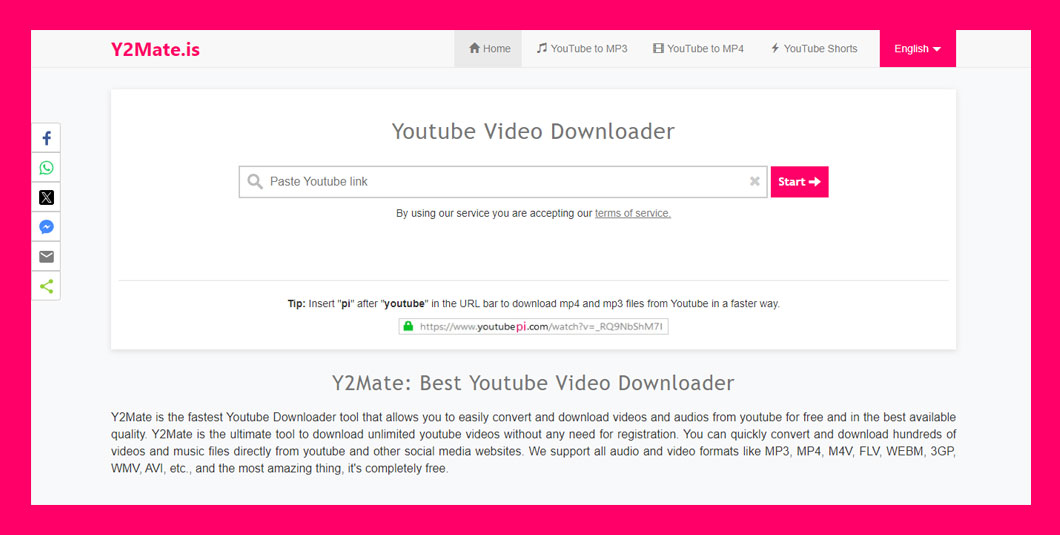
Extracting pristine media requires realistic expectations regarding compression. While marketing claims frequently promise lossless 320kbps audio extraction or untouched 4K video streams, server bandwidth constraints impose practical ceilings.
| Export Format | Source Container | Real-World Delivery Limit | Security Considerations |
|---|---|---|---|
| Standard MP4 Video | H.264 / AAC Mux | 720p, 1080p at 30, 60 FPS | Verify the extension ends in .mp4, not .zip or .exe. |
| Extracted MP3 Audio | Opus / AAC Transcode | 128kbps, 192kbps (Upscaled to 320) | Aggressive popup triggers appear during audio rendering. |
| High-Res MP4 Video | VP9 / AV1 DASH Stream | 1080p (4K often throttled) | Stitching delays trigger deceptive "Wait" overlay screens. |
| M4A Audio Stream | Native AAC Direct Stream | 128kbps Native Fidelity | Safest path for maintaining original source fidelity. |
When selecting audio ripping options, keep in mind that YouTube typically stores audio using the Opus codec at an average bitrate between 50kbps and 160kbps, or AAC at 128kbps. Converting an Opus track into a 320kbps MP3 inflates file size through transcoding interpolation without restoring frequencies discarded during YouTube's initial upload encoding. For true audio preservation, grabbing native AAC or M4A streams provides cleaner sound reproduction than upscaled MP3 containers.

