nude in the rain Early Release unravels art and emotion

The first drops of rain transform nudity into a raw, unfiltered canvas where vulnerability meets artistic expression. From classical mythologies to modern cinema, scenes of bare skin under stormy skies have carried layers of meaning—symbolizing everything from divine cleansing to human fragility. Yet beyond symbolism lies a psychological and emotional alchemy, where water and flesh collide to evoke discomfort, awe, or even transcendence, depending on the viewer’s cultural lens.
Rain does not merely fall in these narratives; it reshapes them. In the 17th century, European painters used downpours to cloak eroticism in moral ambiguity, while Japanese ukiyo-e artists depicted monsoon-soaked geishas as embodiments of fleeting beauty. Today, filmmakers leverage the same elements to strip away pretense, exposing characters—and audiences—to the rawest forms of intimacy or isolation. The question remains: why does rain make nudity feel both forbidden and liberating, a paradox that has endured across centuries and continents?
Rain as a Canvas: The Cultural and Historical Symbolism of Nudity in Rain Scenes Across Art and Media
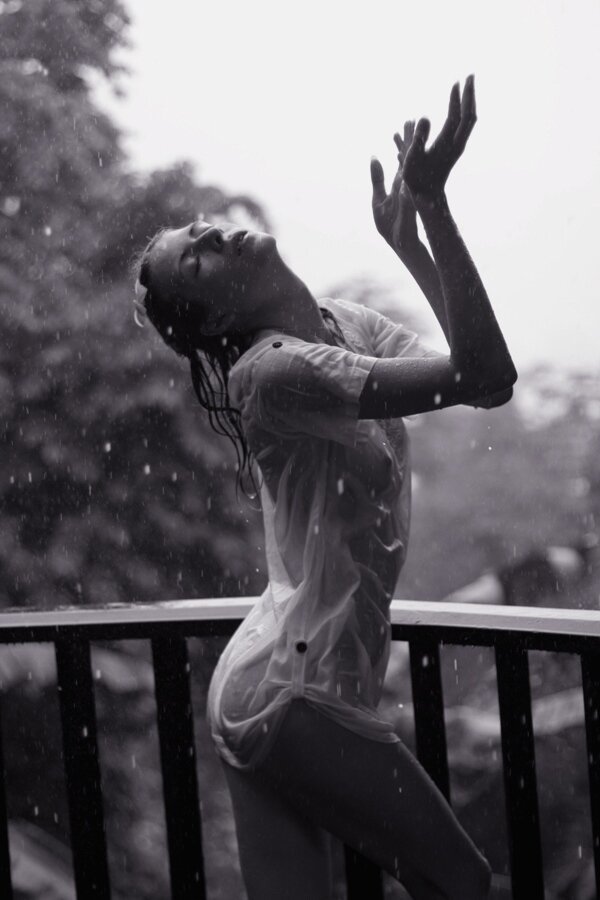
Rain has long served as a potent metaphor in human expression, its presence in art and media transcending mere weather to embody cleansing, transformation, and emotional turmoil. When combined with the vulnerability and raw humanity of nudity, rain becomes a powerful symbol—one that oscillates between purity and sensuality, solitude and connection. From ancient myths to contemporary cinema, the intersection of rain and nudity has been exploited to evoke deep psychological and spiritual responses, reflecting societal attitudes toward the body, nature, and existential reflection. This exploration traces the evolution of rain scenes in art and media, dissecting their symbolic layers while examining how nudity in such settings has been interpreted across cultures, religions, and historical periods.
Symbolic Meanings of Rain in Art, Literature, and Film

Rain is rarely a neutral element in artistic expression; it is a force that shapes narratives and emotional tones. In literature, rain often symbolizes cleansing—both physically and spiritually—while in visual art, it can represent melancholy, rebirth, or the transient nature of beauty. Filmmakers leverage rain to amplify drama, using its auditory and visual textures to heighten tension or introspection. For instance, in The Umbrellas (1966) by René Magritte, rain becomes an absurdist element, challenging the viewer’s perception of reality and intimacy. Meanwhile, in Paris in the Rain (1887) by Vincent van Gogh, rain is not just a backdrop but a character—its rhythmic persistence mirroring the emotional turbulence of urban life. Also read more in-depth coverage at sefarad.cordoba.es.
The duality of rain as both destructive and regenerative is a recurring theme. In The Tempest (1611) by Shakespeare, the storm symbolizes chaos and divine intervention, while in The Great Wave off Kanagawa (1831) by Hokusai, rain-soaked landscapes evoke the awe-inspiring yet perilous relationship between humanity and nature. Modern cinema, such as the opening scene of The Godfather (1972), uses rain to foreshadow violence and moral decay, where the baptismal imagery of water contrasts sharply with the brutality of the narrative. These examples illustrate how rain’s symbolism adapts to cultural and artistic movements, from Romanticism’s emphasis on nature’s sublime power to contemporary minimalism’s focus on isolation and fragility.
Comparative Analysis of Iconic Rain Scenes in Art and Media
Rain scenes in art and media have been systematically employed to convey complex emotions and themes. Below is a comparative table highlighting 10 iconic works, their creators, and the symbolic interpretations of rain within their contexts.
Table of Contents
- Rain as a Canvas: The Cultural and Historical Symbolism of Nudity in Rain Scenes Across Art and Media
- Symbolic Meanings of Rain in Art, Literature, and Film
- Comparative Analysis of Iconic Rain Scenes in Art and Media
- Evolution of Rain Scenes in Visual Media: A Cultural Timeline
- Rain in Religious and Mythological Narratives: Foundations of Artistic Depictions
- Psychological and Emotional Impact of Nudity in Rain Scenes
- Vulnerability and Exposure in Rain Scenes
- Emotional Triggers in Nude Rain Scenes
- Filmmakers’ Use of Rain and Nudity to Amplify Tension or Intimacy
| Title/Work | Year | Artist/Filmmaker | Symbolic Interpretation of Rain |
|---|---|---|---|
| The Great Wave off Kanagawa | 1831 | Katsushika Hokusai | Nature’s overwhelming power; the transient yet eternal cycle of destruction and renewal. |
| Paris in the Rain | 1887 | Vincent van Gogh | Urban solitude; the monotony and melancholy of modern life, with rain as a silent observer. |
| The Umbrellas | 1966 | René Magritte | Absurdism and detachment; rain as an indifferent force disrupting human connection. |
| The Godfather (Baptism Scene) | 1972 | Francis Ford Coppola | Foreshadowing violence; baptismal imagery corrupted by the brutality of the mafia. |
| Wanderer Above the Sea of Fog | 1818 | Caspar David Friedrich | Existential isolation; rain-soaked mist symbolizing the insignificance of humanity in nature. |
| Rain (Film) | 1952 | Hou Hsiao-hsien (later inspired by) | Minimalist storytelling; rain as a natural force that shapes human fate without intervention. |
| Noah’s Ark (Biblical Narrative) | ~2348 BCE (estimated) | Anonymous (Hebrew Bible) | Divine cleansing; rain as a tool of judgment and rebirth, purging humanity of sin. |
| Spring (Seasonal Theme in Art) | Various (e.g., Botticelli’s Primavera, 1482) | Sandro Botticelli | Renewal and fertility; rain as an essential catalyst for life’s cyclical regeneration. |
| Blade Runner (2019) | 1982 | Ridley Scott | Dystopian melancholy; rain obscuring moral clarity in a technologically alienated world. |
| The Rainmaker (Film) | 1997 | Francis Ford Coppola | Redemption and chance; rain as a metaphor for serendipity and the unpredictable nature of life. |
This table underscores how rain’s symbolic potential has been harnessed across disciplines, from religious texts to avant-garde cinema. The consistency of its interpretations—whether as a purifier, a destroyer, or a silent witness—demonstrates its universal resonance in human storytelling.
Evolution of Rain Scenes in Visual Media: A Cultural Timeline
The depiction of rain in art has undergone significant transformations, reflecting broader cultural and technological shifts. During the Romantic era (late 18th to mid-19th century), rain was often glorified as a force of nature that evoked emotion and introspection. Artists like J.M.W. Turner and Caspar David Friedrich used rain to emphasize the sublime—the awe-inspiring yet terrifying power of the natural world. In Friedrich’s Wanderer Above the Sea of Fog (1818), the lone figure dwarfed by mist and rain symbolizes humanity’s insignificance, a theme that resonated with the era’s philosophical explorations of individualism and existentialism.
By the late 19th and early 20th centuries, the Impressionist and Symbolist movements shifted focus toward capturing rain’s optical effects and psychological impact. Van Gogh’s Paris in the Rain (1887) and Monet’s Rain Effect at the Gare Saint-Lazare (1877) prioritized the transient, atmospheric qualities of rain, moving away from narrative-driven compositions. This period also saw rain used in literary naturalism, where it mirrored the harsh realities of urban poverty, as seen in Émile Zola’s Germinal (1885).
The mid-20th century marked a transition toward cinematic and photographic realism, where rain became a narrative device rather than a symbolic backdrop. Films like Casablanca (1942) and The Godfather (1972) employed rain to underscore emotional climaxes or moral dilemmas, while directors like Hou Hsiao-hsien in Rain (1952) stripped rain of dramatic flair, presenting it as an indifferent, almost meditative force. Contemporary art and media, particularly in minimalist and surrealist works, have further abstracted rain’s symbolism, often using it to explore isolation, digital alienation, or environmental anxiety.
Rain in Religious and Mythological Narratives: Foundations of Artistic Depictions
Religious and mythological traditions have profoundly influenced how rain—and nudity within rain—has been depicted in art. In Abrahamic religions, rain is frequently tied to divine judgment and renewal. The Great Flood in the Hebrew Bible (Genesis 6–9) serves as a foundational narrative where rain becomes an instrument of
Psychological and Emotional Impact of Nudity in Rain Scenes
The intersection of nudity and rain in visual storytelling transcends mere aesthetic appeal, delving into the subconscious layers of human psychology. Rain, as a natural phenomenon, carries intrinsic associations with cleansing, renewal, and vulnerability—qualities that amplify when paired with the raw exposure of nudity. Studies in environmental psychology, such as those by Ulrich (1984) on biophilia and Kaplan (1995) on attention restoration theory, suggest that nature-based stimuli evoke profound emotional and physiological responses. When nudity enters this equation, the sensory and symbolic contrasts create a unique psychological landscape, where discomfort and ecstasy, isolation and connection, coexist. Rain acts as a medium that dissolves conventional boundaries, making the body’s exposure feel both intimate and universal—a paradox that filmmakers and artists exploit to evoke tension, catharsis, or even spiritual transcendence.
The emotional triggers in nude rain scenes are multifaceted, engaging the viewer’s sensory, visual, and symbolic associations simultaneously. Rain disrupts the controlled environment of human comfort, forcing a confrontation with elemental forces that mirror the unpredictability of human emotion. Nudity, in turn, strips away societal veils, leaving the individual exposed not just physically but emotionally. This dual exposure creates a psychological tension that can be harnessed to reflect inner turmoil, liberation, or the fragility of human connection. The following exploration dissects these layers, examining how rain and nudity interact to shape emotional narratives in cinema, literature, and personal experiences.
Vulnerability and Exposure in Rain Scenes
The psychological effect of vulnerability in nude rain scenes stems from the collision of two primal human instincts: the need for protection and the desire for authenticity. Rain, as an uncontrollable force, symbolizes the chaos of life, while nudity represents unfiltered honesty. Research in embodied cognition (Lakoff & Johnson, 1999) suggests that physical exposure can trigger metaphorical associations, where the body’s state influences emotional perception. For instance, the cold and wetness of rain activate the sympathetic nervous system, heightening alertness and stress responses, while nudity—particularly when unexpected—can evoke feelings of social exposure anxiety (Schlenker, 1980). However, when these elements are framed intentionally, as in art or cinema, they can also induce a paradoxical sense of safety in vulnerability, where the raw exposure feels liberating rather than threatening.
A study by Piff et al. (2010) on the psychology of social connection found that exposure to natural elements, such as rain or water, can foster a sense of humility and interconnectedness, reducing ego-centric tendencies. In the context of nudity, this translates to an emotional state where the individual’s worth is not tied to societal validation but to their essential, unadorned self. Rain further amplifies this by acting as a neutralizing agent; it washes away artificiality, leaving only the raw, unfiltered essence. This dynamic is particularly potent in scenes where characters are grappling with identity crises, as the elements mirror their internal struggles. For example, in Eternal Sunshine of the Spotless Mind (2004), Joel’s (Jim Carrey) nude scene in the rain during his memory-erasure therapy symbolizes the stripping away of his constructed identity, leaving him exposed to the core of his unresolved emotions.
Emotional Triggers in Nude Rain Scenes
Nude rain scenes activate a complex web of emotional responses, categorized into sensory, visual, and symbolic triggers, each contributing to the overall psychological impact. Understanding these triggers allows filmmakers to craft scenes that resonate deeply with audiences, evoking empathy, tension, or catharsis.
Sensory Triggers Rain engages multiple senses simultaneously, creating a multisensory experience that deepens the emotional connection to nudity. The tactile sensation of cold water, the sound of droplets hitting skin, and even the scent of petrichor (the earthy smell after rain) contribute to a physiologically immersive environment. This sensory overload can induce: - Cold-induced arousal: The shock of cold water on exposed skin triggers a startle response, followed by a surge of adrenaline, which can heighten emotional intensity. - Tactile contrast: The juxtaposition of wetness against skin creates a sensory dissonance, evoking discomfort or euphoria depending on context (e.g., forced exposure vs. voluntary surrender). - Auditory immersion: The rhythmic sound of rain can induce a trance-like state, slowing perception and making nudity feel more intimate or meditative.
Visual Triggers Water distorts and refracts light, creating a dynamic visual language that enhances the emotional weight of nudity. Key visual elements include: - Transparency and opacity: Raindrops clinging to skin create a translucent effect, blurring the line between vulnerability and strength. This ambiguity invites viewers to project their own interpretations onto the scene. - Light and shadow play: Rain scatters light, casting dappled or diffused illumination that softens harsh lines, making nudity appear more ethereal or melancholic. - Movement and fluidity: The way water flows over the body emphasizes organic motion, contrasting with the rigid expectations of societal norms.
Symbolic Triggers Rain and nudity carry deep symbolic weight, often tied to themes of purification, surrender, or rebirth. These symbols amplify the emotional resonance of scenes: - Liberation from constraints: Nudity in rain can represent a shedding of societal or personal burdens, as seen in Whale Rider (2002), where Paikea’s (Keisha Castle-Hughes) solitary swim in the ocean (a rain-adjacent motif) symbolizes her rejection of gendered expectations. - Surrender to nature: Rain scenes often depict characters yielding to the elements, reflecting themes of acceptance or resignation, as in The Piano (1993), where Ada’s (Holly Hunter) bath scenes blend nudity with the rhythmic, almost hypnotic, presence of water. - Fragility and resilience: The contrast between the delicate human form and the overwhelming power of rain underscores themes of human vulnerability and endurance, as explored in The Shape of Water (2017), where the amphibious creature’s nudity in water evokes both awe and pity.
Filmmakers’ Use of Rain and Nudity to Amplify Tension or Intimacy
Filmmakers leverage the psychological power of nude rain scenes to heighten emotional stakes, using the elements as a metaphorical amplifier for tension, intimacy, or existential dread. The choice between tension and intimacy often hinges on framing, pacing, and narrative context. Below are analyses of key films that demonstrate these techniques:
Tension as Catharsis: Blue Valentine (2010) Derek Cianfrance uses rain and nudity in Blue Valentine to externalize the collapse of a relationship. The climactic scene, where Cindy (Michelle Williams) walks through a downpour in her underwear, symbolizes her emotional unraveling. The rain’s relentless force mirrors the inescapable pain of heartbreak, while her partial undressing represents the exposure of raw, unfiltered emotion. The tension arises from the contradiction between beauty and suffering—the visual allure of her form is undermined by the despair etched on her face. The audience’s discomfort stems from the violation of privacy, as the rain strips away her composure, leaving her vulnerable in a way that feels both intimate and invasive.
Intimacy as Connection: The Shape of Water (2017) Guillermo del Toro’s film employs nudity in rain-adjacent water scenes to foster a sense of otherworldly intimacy. The amphibious creature’s (Michael Shannon) nude moments in the pool symbolize transcendence of human boundaries, while Elisa’s (Sally Hawkins) bath scenes blend sensuality with spiritual purification. The rain-soaked scenes in the film’s climax, where Elisa and the creature embrace in the flooded basement, use water as a neutralizing medium—erasing the stigma of their union. The intimacy here is universal, transcending species and societal norms, as the rain washes away the last remnants of judgment.
Existential Dread: Eternal Sunshine of the Spotless Mind (2004) Charlie Kaufman and Michel Gondry’s film uses Joel’s nude rain scene to convey the horror of self-erasure. The rain acts as a metaphor for the irreversible loss of memory, while his nudity symbolizes the stripping away of his constructed identity. The tension is psychological, as the audience witnesses Joel’s forced vulnerability—not just physically, but existentially. The scene’s power lies in its ambiguity: is Joel being punished, cleansed, or liberated? The rain’s indifference amplifies the absurdity of his situation, making the audience question whether his suffering is justified or meaningless.
Solitary vs
Nudity in the rain is more than a visual trope; it is a cultural and psychological mirror reflecting humanity’s complex relationship with exposure—both literal and emotional. Whether through the brushstrokes of a Renaissance master or the cinematography of a contemporary auteur, these scenes challenge perceptions of purity, power, and vulnerability. As technology and societal norms evolve, the early release of this exploration invites a deeper conversation: in a world increasingly obsessed with control, why does the chaos of rain and flesh continue to resonate as a universal language of truth?
Leave a Comment
Comments are moderated before appearing. The data you submit is processed according to the Privacy Policy of Amigoskings.