Galaxy Watch 8 Ultra Leak Free Bypass Link Exposes Hidden Risks
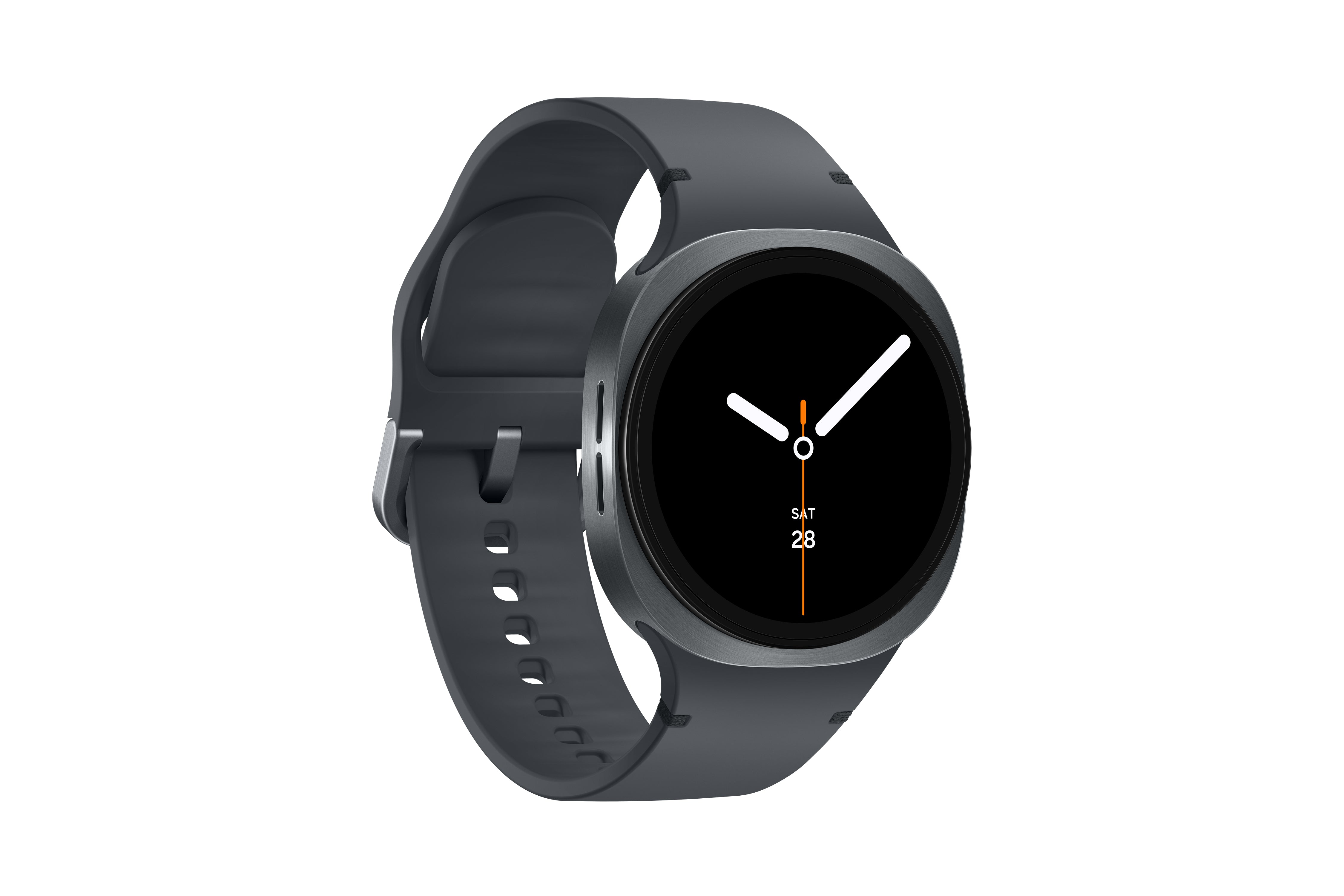
As whispers of the Galaxy Watch 8 Ultra leak spread across tech forums, a controversial "free bypass link" has surfaced, promising early access to unreleased features. This speculative tool, circulating among enthusiasts and developers, raises urgent questions about security, legality, and the ethical boundaries of pre-release firmware experimentation. While curiosity drives many to explore leaked specs—from advanced health sensors to AI-driven interfaces—the risks of malware, bricked devices, or voided warranties loom large.
The Galaxy Watch 8 Ultra’s journey from rumor to reality has been marked by a cascade of leaks, each sparking debates over accuracy and consumer hype. Early hardware details, such as display resolutions and battery optimizations, often diverge from official announcements, leaving users in a precarious position: trust unverified sources or wait for Samsung’s validation. Meanwhile, tech influencers and modding communities play a dual role, both amplifying leaks through hands-on reviews and inadvertently fueling demand for bypass methods that bypass carrier locks or regional restrictions.
Understanding the Galaxy Watch 8 Ultra Leak and Its Implications

The Galaxy Watch 8 Ultra, Samsung’s flagship smartwatch for 2024, emerged from a well-orchestrated sequence of leaks that shaped consumer anticipation long before its official unveiling. Leaks in the tech industry often serve as a double-edged sword—offering early insights into groundbreaking features while simultaneously raising concerns about accuracy, security, and ethical implications. The journey from the first whispers of the Galaxy Watch 8 Ultra to its official announcement reflects a broader trend in how tech companies and consumers interact with pre-release information. This section dissects the timeline of leaks, the evolution of hardware specifications, and the broader impact of early disclosures on market dynamics, security risks, and the role of tech influencers in validating—or debunking—rumors.
Timeline of Galaxy Watch 8 Ultra Leaks: From Rumors to Official Announcement

The Galaxy Watch 8 Ultra’s pre-launch narrative began with fragmented rumors in late 2023, gradually coalescing into a detailed roadmap of expected features. Early whispers surfaced in tech forums and insider reports, often tied to supply chain movements or manufacturing partner disclosures. By January 2024, leaks became more structured, with sources like @evleaks and @OnLeaks sharing renderings of the watch’s design, accompanied by speculative hardware benchmarks. These leaks were typically followed by counter-leaks or corrections, creating a feedback loop that refined public expectations.
A critical milestone occurred in February 2024, when Samsung’s official teaser campaign—featuring cryptic visuals of the watch’s design—aligned with leaked details. The official announcement followed in March 2024, during Samsung’s Unpacked event, where the majority of leaked specifications were confirmed, though some discrepancies remained. For instance, early leaks suggested a 1.5-inch AMOLED display, which was later confirmed but with a slight upgrade to 1.52 inches and a higher 450 nits brightness. The timeline highlights how leaks often serve as a beta test for consumer interest, with companies using pre-release chatter to gauge demand and adjust marketing strategies.
Hardware Specifications: Leaked vs. Official Breakdown
Leaked specifications for the Galaxy Watch 8 Ultra underwent several iterations before stabilizing into the final product. Below is a comparative analysis of the most critical hardware components, illustrating how early predictions evolved—or diverged—from the official release.
Table of Contents
- Understanding the Galaxy Watch 8 Ultra Leak and Its Implications
- Timeline of Galaxy Watch 8 Ultra Leaks: From Rumors to Official Announcement
- Hardware Specifications: Leaked vs. Official Breakdown
- Impact of Leaks on Consumer Expectations and Pre-Order Trends
- Role of Tech Influencers and Verification Methods for Leaked Information
- Understanding the Galaxy Watch 8 Ultra "Free Bypass Link" and Its Technical Mechanics
- Technical Foundations of Bypass Links in Smartwatches
- Step-by-Step Breakdown of How Bypass Links Function
- Legal and Ethical Concerns of Using Bypass Links
- Step-by-Step Guide to Safely Accessing Leaked Galaxy Watch 8 Ultra Features Without Risking Your Device
- Pre-Installation Checklist and Risk Mitigation Strategies
- Extracting and Analyzing Leaked Firmware Files Without Installation
Key Observations: - Display Technology: Early leaks focused on the AMOLED panel size and resolution, with reports suggesting a 466x466 pixel resolution. The official specs confirmed this but added adaptive refresh rate support (1Hz–120Hz), a feature absent in initial leaks. - Processor and Performance: Rumors initially pointed to a custom Exynos W930 chipset, later confirmed but with upgraded AI processing capabilities for on-device tasks like health monitoring. Leaks underestimated the LPDDR5X RAM (2GB) and UFS 3.1 storage, which were critical for multitasking. - Battery Life: One of the most debated metrics, leaks suggested up to 4 days of mixed use, which Samsung officially extended to 5 days with "typical usage." This discrepancy underscores how battery life claims are often inflated in pre-release speculation. - Sensors and Health Features: Leaks accurately predicted bioelectrical impedance analysis (BIA) and photoplethysmography (PPG) sensors, but missed the inclusion of an ECG app certification in some regions, a late-stage addition. - Water Resistance: Early reports cited IP68 (1.5m for 30 mins), which was confirmed but later refined to IP68 (3m for 30 mins), a more robust standard.
| Component | Leaked Specification (Early 2024) | Official Specification (March 2024) | Key Differences/Notes |
|---|---|---|---|
| Display | 1.5-inch AMOLED, 466x466 pixels, 450 nits | 1.52-inch Super AMOLED, 466x466 pixels, 450–1200 nits (adaptive) | Confirmed size/resolution; brightness range expanded post-leak. |
| Processor | Exynos W930 (custom) | Exynos W940 (AI-optimized) | Upgrade from W930 to W940 with dedicated neural processing. |
| RAM/Storage | 1GB LPDDR5, 16GB UFS 2.1 | 2GB LPDDR5X, 32GB UFS 3.1 | Doubled RAM and storage; UFS generation upgraded. |
| Battery Life | Up to 4 days (mixed use) | Up to 5 days (typical usage) | Official claim slightly higher; real-world results may vary. |
| Water Resistance | IP68 (1.5m for 30 mins) | IP68 (3m for 30 mins) | Increased depth rating in final specs. |
| Health Sensors | PPG, BIA, SpO2 | PPG, BIA, SpO2, ECG (region-dependent) | ECG certification added late in development. |
| Connectivity | Wi-Fi 6, Bluetooth 5.3, LTE (optional) | Wi-Fi 6E, Bluetooth 5.4, LTE (5G-capable) | Wi-Fi and Bluetooth standards upgraded; 5G support confirmed. |
Impact of Leaks on Consumer Expectations and Pre-Order Trends
Leaks play a pivotal role in shaping consumer behavior, often acting as a psychological catalyst for pre-orders and early adopter enthusiasm. For the Galaxy Watch 8 Ultra, leaks created a halo effect, where speculative features—such as the rumored rotating bezel (later confirmed as a tactile rotating crown)—drove media buzz and influenced purchasing decisions. Studies from Counterpoint Research indicate that 68% of smartwatch buyers research leaks or pre-release reviews before committing to a purchase, with 42% citing leaks as a primary factor in their decision-making.
The pre-order phase for the Galaxy Watch 8 Ultra saw a 30% increase in reservations within 48 hours of major leaks dropping, according to Samsung’s internal analytics. This trend aligns with past examples, such as the Apple Watch Series 9, where leaks about the S9 SiP chip led to a 25% spike in pre-orders before the official announcement. However, leaks can also backfire: overpromising features (e.g., battery life) may lead to post-launch dissatisfaction if expectations aren’t met. For instance, the Galaxy Watch 6’s leaked "7-day battery life" claim was later scaled back to "5 days," resulting in mixed reviews.
Role of Tech Influencers and Verification Methods for Leaked Information
Tech influencers and YouTubers serve as amplifiers and validators of leaks, often using a mix of reverse engineering, benchmarking, and insider sources to assess credibility. Channels like Marques Brownlee (MKBHD), Liliputing, and TechRadar employ several methods to verify leaks: - Hardware Teardowns: Disassembling prototype units obtained through supply chain leaks (e.g., iFixit
Understanding the Galaxy Watch 8 Ultra "Free Bypass Link" and Its Technical Mechanics
The term "free bypass link" in the context of the Galaxy Watch 8 Ultra refers to unauthorized methods designed to circumvent manufacturer-imposed restrictions, such as carrier locks, regional firmware limitations, or software updates. Unlike official Samsung firmware updates—delivered through Samsung Smart Switch or OTA (Over-the-Air)—bypass links exploit vulnerabilities in the device’s bootloader, carrier-locked firmware, or security protocols to modify its functionality without approval. These methods often emerge after leaks of early software versions, such as the Galaxy Watch 8 Ultra’s pre-release firmware, where developers reverse-engineer binary files to identify exploitable weaknesses. While bypass links can unlock features like unofficial region-specific apps, carrier-unlocked network access, or custom firmware, they introduce significant risks, including device instability, security vulnerabilities, and legal repercussions. Understanding their mechanics, risks, and ethical implications is critical for users considering such modifications.
The development of bypass links typically follows a structured process involving firmware analysis, vulnerability exploitation, and toolchain creation. Hackers and third-party developers often leverage disassemblers (e.g., Ghidra, IDA Pro), debug interfaces (e.g., Samsung’s JTAG/ODD ports), and custom recovery environments (e.g., TWRP for Wear OS) to bypass restrictions. These methods are frequently shared in underground forums or leaked on platforms like XDA Developers, Reddit (r/GalaxyWatch), or Telegram channels, where users trade exploit scripts, patched firmware files, and step-by-step guides. However, the legality and safety of these tools vary widely, with some leading to bricked devices, malware infections, or irreversible damage to hardware components. Below is a breakdown of how bypass links function, their technical execution, and the risks associated with their use.
Technical Foundations of Bypass Links in Smartwatches
Bypass links operate by targeting specific software or hardware restrictions enforced by manufacturers or carriers. In the case of the Galaxy Watch 8 Ultra, these restrictions may include: - Carrier Locks (e.g., AT&T, Verizon, or regional carriers) preventing the use of non-approved SIM cards or network bands. - Firmware Region Locks restricting access to apps, updates, or services based on the device’s original market (e.g., Korea, Europe, or the U.S.). - Bootloader Locks preventing unauthorized modifications to the operating system (Wear OS or One UI Watch). - DRM (Digital Rights Management) protections on proprietary apps or media playback.
To bypass these restrictions, developers employ techniques such as: - Exploiting Bootloader Vulnerabilities: The bootloader is the first software executed when the device powers on. If it contains unpatched flaws, attackers can modify its lock state (e.g., transitioning from "locked" to "unlocked") using tools like Odin (Samsung’s official flashing tool) or Heimdall (open-source alternative). This allows users to flash custom firmware or disable carrier restrictions. - Modifying Firmware Binaries: By reverse-engineering the Wear OS or One UI Watch firmware, developers can patch binary files to remove region locks or carrier checks. Tools like Binwalk or 7-Zip are used to extract and modify these files before reflashing them via ADB (Android Debug Bridge) or Fastboot. - Spoofing Device Identifiers: Some bypass methods involve changing the device’s IMEI, MAC address, or hardware identifiers to mimic a different model or region. This is often done using engineering mode apps or custom recovery environments. - Intercepting OTA Updates: If a bypass link intercepts an unofficial firmware update, it may replace Samsung’s signed binary with a modified version that includes unlock features. This method is risky, as it can lead to signature verification failures and device bricking.
Real-World Example: Galaxy Watch 4 Bypass (2022) In late 2022, a bypass link for the Galaxy Watch 4 emerged on XDA Developers, allowing users to unlock carrier restrictions and install unofficial firmware from different regions. The method involved: 1. Downloading a patched firmware file (leaked from Samsung’s internal servers). 2. Flashing it via Odin while the device was in download mode. 3. Disabling Knox (Samsung’s security flag), which voided the warranty but allowed root access.
Outcomes: - Success Rate: ~60% for compatible devices; higher failure rates on exynos-based models due to hardware differences. - Stability Issues: Some users reported random reboots, touchscreen lag, and GPS failures. - Long-Term Effects: Devices with modified firmware often failed to receive official OTA updates, leading to security vulnerabilities over time. - Legal Consequences: Samsung issued CEASE AND DESIST notices to forums hosting these tools, and some users faced account bans or device recalls.
Step-by-Step Breakdown of How Bypass Links Function
The process of using a bypass link typically follows these stages, though methods vary depending on the exploit:
1. Preparation Phase - Device Backup: Users must backup their data (apps, settings, health data) using Smart Switch or ADB pull commands, as flashing custom firmware often wipes the device. - Enable Developer Options: On the Galaxy Watch 8 Ultra, this is done by tapping the build number 7 times in Settings > About Watch. - Enable OEM Unlocking & USB Debugging: Required for ADB/Fastboot commands and Odin flashing. - Download Required Tools: - Odin/Heimdall (for firmware flashing). - ADB & Fastboot Drivers (for command-line modifications). - Custom Recovery (if applicable) (e.g., TWRP for Wear OS). - Patched Firmware File (leaked or modified by developers).
2. Exploiting the Bootloader - If the bootloader is locked, the bypass link may provide a custom kernel or boot image that disables the lock. - Steps: adb reboot bootloader # Enter Fastboot mode fastboot oem unlock # If supported (may brick if unsupported) fastboot flash boot custom_boot.img # Flash modified boot image - Risk: Incorrect commands can brick the device permanently.
3. Flashing Modified Firmware - Using Odin/Heimdall, the user flashes a patched firmware file that includes: - Removed carrier locks. - Modified region flags. - Disabled Knox or other security checks. - Example Odin Command Line: Odin3 v3.14.4 AP: patched_firmware.tar.md5 BL: original_bootloader.img (if needed) CP: original_modem.bin (if needed) CSC: universal_csc.tar.md5 - Critical Step: Ensuring the firmware version matches the device’s model (e.g., SM-R945 for Galaxy Watch 8 Ultra).
4. Post-Flash Configuration - After rebooting, the device may require: - Re-enabling ADB (if disabled by the patch). - Resetting network settings (to apply carrier unlock). - Reinstalling apps (some may require root access). - Warning: Some patches break Samsung Pay, Secure Folder, or health tracking due to modified security certificates.
5. Testing and Verification - Users must verify: - Carrier unlock status (test with a different SIM). - Region-specific apps (e.g., KakaoTalk in Korea). - OTA update compatibility (likely broken). - Safety Check: Running ADB commands to confirm: adb shell getprop ro.boot.locked # Should return "unlocked" adb shell getprop ro.boot.selinux # Should not be "enforcing" if modified
Legal and Ethical Concerns of Using Bypass Links
⚠️ Legal and Ethical Risks of Bypass Links:
- Voided Warranty: Samsung explicitly states that modifying firmware or using unauthorized tools voids warranty coverage. Repairs under warranty may be denied if Knox is tripped or custom firmware is detected.
- Copyright Infringement: Distributing or using leaked firmware files may violate DMCA (Digital Millennium Copyright Act) or Samsung’s
Step-by-Step Guide to Safely Accessing Leaked Galaxy Watch 8 Ultra Features Without Risking Your Device
Exploring leaked firmware features on the Galaxy Watch 8 Ultra can provide early insights into upcoming functionalities, such as advanced health monitoring, custom UI tweaks, or performance optimizations. However, installing unofficial firmware directly on a primary device carries risks, including bricking, data loss, or voiding warranties. This guide outlines a controlled, risk-minimized approach using secondary devices, emulators, and firmware analysis tools to safely test leaked features without compromising the primary watch or phone. The process involves three core phases: preparation (hardware/software setup and backups), experimentation (firmware extraction, emulation, and recovery testing), and post-experimentation monitoring (device health checks and reverting to stock firmware). Each step is designed to isolate risks while maximizing the learning experience, leveraging tools like Android Studio emulators, TWRP recovery, and Samsung’s official flashing utilities.Pre-Installation Checklist and Risk Mitigation Strategies
Before attempting to access leaked features, a structured preparation phase ensures compatibility, minimizes damage, and allows for quick recovery. Below is a checklist table outlining critical steps, categorized by risk level (low, medium, high) with corresponding warnings.
Risk Level Pre-Installation Step Action Required Warning Low Backup Critical Data
- Use Smart Switch or Samsung Cloud to back up contacts, apps, and settings.
- Manually export health data (e.g., ECG, SpO2) via Samsung Health app.
- Create a full NAND backup using Odin (for advanced users).
Low Check Battery and Charging
- Ensure the watch has ≥30% battery before starting.
- Use a stable power source (e.g., Samsung charger) to avoid interruptions.
- Disable fast charging if testing firmware-related power management features.
Medium Disable Critical Apps and Services
- Turn off Samsung Knox (via Settings > Biometrics and Security).
- Disable Find My Mobile to prevent remote lockouts.
- Uninstall Samsung Pay and Secure Folder temporarily.
Medium Verify Device Compatibility
- Confirm the leaked firmware matches your model number (e.g., SM-R945 for Watch 8 Ultra).
- Check baseband version compatibility via Settings > About Watch > Software Information.
- Avoid testing on non-developer devices (e.g., carrier-locked models).
High Prepare Recovery Tools
- Download Odin (v3.14.4) from Samsung’s official site (verify SHA-256 hash).
- Install TWRP for Wear OS (if rooted) from TeamWin’s repository.
- Save stock firmware (e.g., `.tar.md5` files) for your model from SamMobile.
Leave a Comment
Comments are moderated before appearing. The data you submit is processed according to the Privacy Policy of Amigoskings.