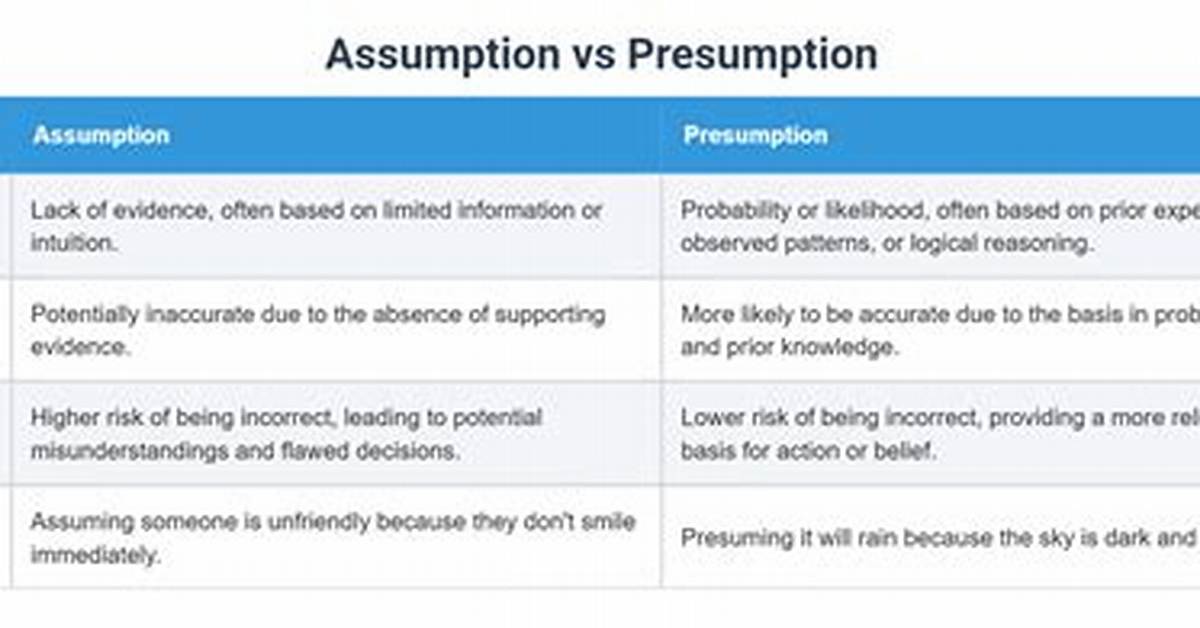
Differentiating these terms in speech and writing requires zero academic overhead. A simple mnemonic resolves the confusion:
- Presumption relies on Probability and Proof.
- Assumption relies on Absence of evidence and Arbitrary thought.
Before using either term, run the context through two diagnostic questions:
- Can I point to an observable fact, baseline statistic, or legal statute that justifies this position? If yes, use presume.
- Am I accepting this premise simply to proceed with the conversation or because I feel it is true? If yes, use assume.
Consider standard conversational contexts:
- "Dr. Livingston, I presume?" Henry Morton Stanley used this formulation because Livingston was the only white European known to be in that region of Central Africa. The deduction stemmed from probability and observable fact, making "assume" inappropriate.
- "He walked into the negotiation assuming they had unlimited funding." The subject conducted no discovery and saw no financial balance sheets. He relied on pure speculation, making "assumption" the correct word.

