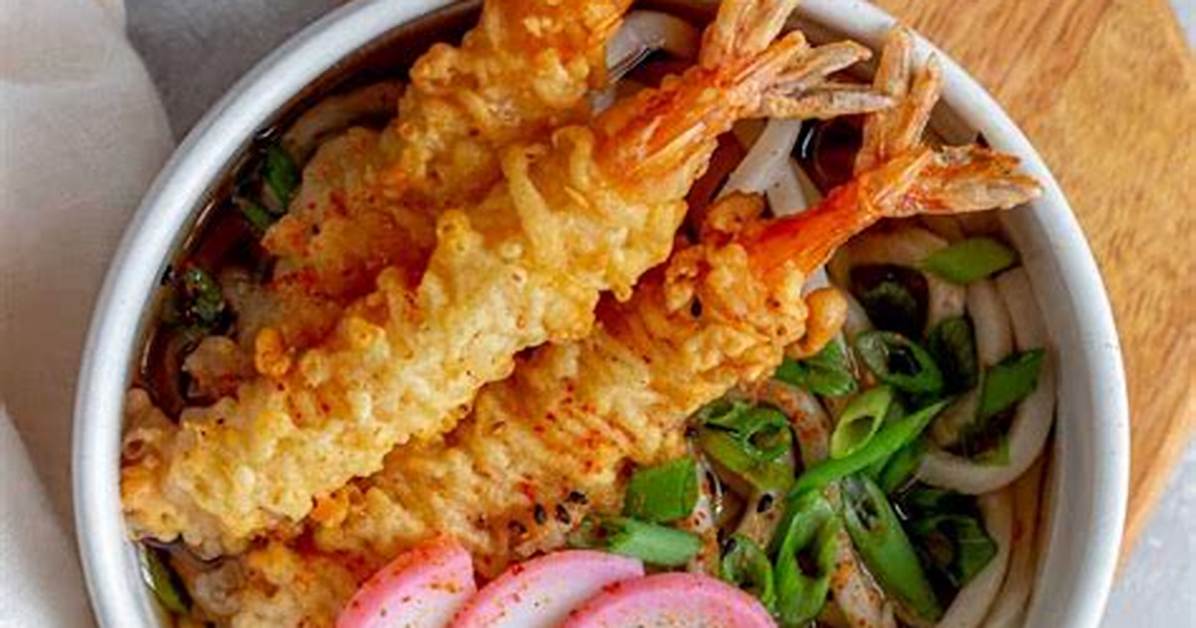
A bowl of udon stands or falls on its broth. Unlike ramen, which frequently relies on long-simmered animal fats and heavy garlic oils, standard kake udon utilizes a refined dashi broth composed of steeped dried kelp (kombu), smoked skipjack tuna flakes (katsuobushi), and occasionally dried baby sardines (iriko). The liquid is seasoned lightly with usukuchi (light-colored soy sauce), mirin, and sea salt.
The chemistry matters. The glutamic acid in kombu combines synergistically with the inosinic acid in bonito flakes, multiplying perceived umami on the palate without adding saturated fat. This light, golden broth creates the foundation for tempura dipping technique. When a piece of fried seafood or vegetable meets this hot, savory liquid, the seasoned crust partially softens, releasing toasted sesame and frying oils directly into the soup. The broth enriches the tempura; the tempura enriches the broth. Every spoonful transforms as you eat.

