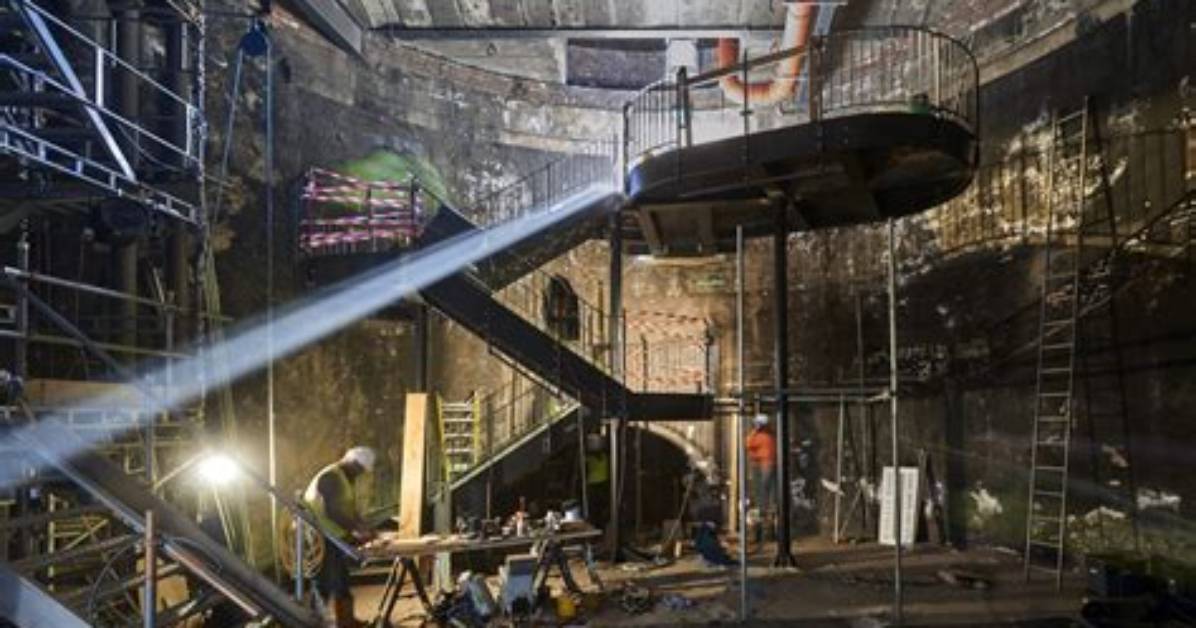
Before the horizontal shield could advance beneath the riverbed, workers had to descend 60 feet into saturated silt alongside the riverbank. Excavating a vertical hole of that scale with conventional pickaxes would have triggered an inward collapse of surrounding earth. Marc Brunel devised an unprecedented construction solution that astonished contemporary engineers.
Laborers erected a massive brick cylinder directly on top of the ground: 50 feet in diameter, 42 feet high, and featuring brick walls 3 feet thick. A cast-iron cutting kerb formed the base of this masonry tower. As laborers hand-dug clay out from beneath the bottom edge, the colossal 1,000-ton brick cylinder sank into the wet soil through sheer gravitational pull. Steam-driven water pumps mounted on the structure expelled incoming groundwater.
Once the giant cylinder settled into its final subterranean position, miners broke through one side of the lower wall to launch the horizontal shield toward the Wapping bank. The shaft transformed into an operational nexus. It hoisted hundreds of tons of excavated earth, took in thousands of London stock bricks, and ventilated the damp, subterranean gallery where hundreds of men toiled around the clock.

