Names do not trend in a social vacuum. For generations under American slavery and Jim Crow, African Americans were pressured to conform strictly to Anglo-Saxon naming standards. Plantation ledgers and early census rolls show millions of Black citizens carrying repetitive, conventional English names: John, William, James, Mary, and Elizabeth.
The Black Power movement and the cultural shifts of the late 1960s shattered that conformity. African American culture began exercising intentional creative sovereignty across music, fashion, and naming practices. Black parents rejected the expectation to pull names exclusively from standard European royal lineages. They wanted names that sounded distinct, melodic, and intentional.
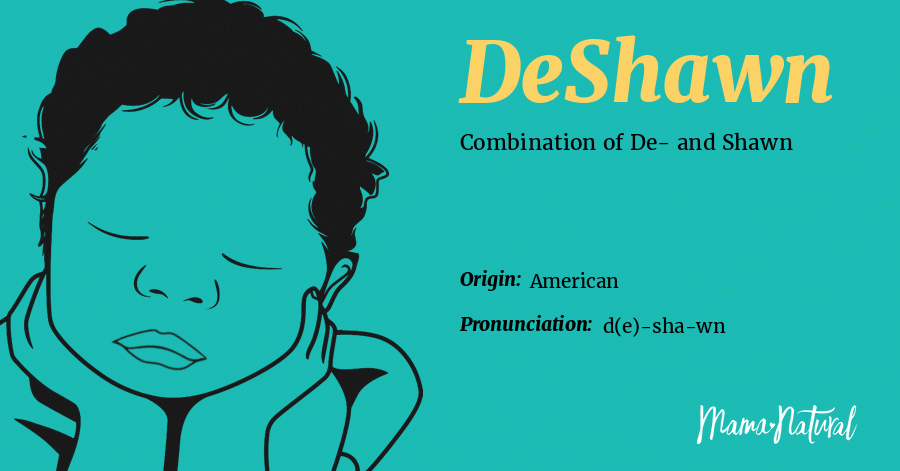
Prefixing names with La-, De-, Sha-, and Ja- became an expressive hallmark of this era. Linguist Geneva Smitherman noted that this creative surge allowed families to build personalized identities while retaining connections to familiar phonetic roots. Choosing DeShawn was an act of personal agency. It allowed parents to honor the traditional Christian sentiment of "God is gracious" while clothing that ancient message in an unapologetically modern aesthetic.

